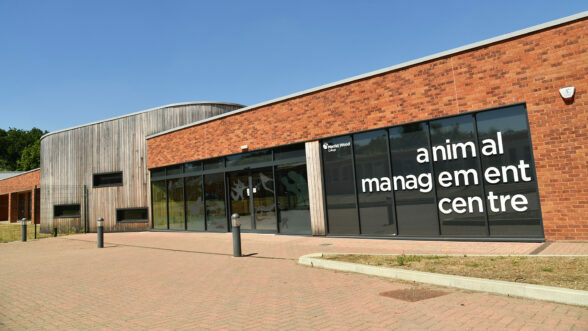
The Level 2 BTEC Technical Diploma in Agriculture is designed for learners who want to develop the practical skills, technical knowledge and industry experience needed for a career in the agricultural sector. Combining classroom-based study with hands-on training, the course provides a strong foundation for progression into employment, apprenticeships or further study.
Learners will develop skills in livestock production, crop production, agricultural machinery operation and estate maintenance, while gaining an understanding of modern farming practices and the wider agricultural industry.
Based at Merrist Wood College, learners have access to specialist agricultural facilities, livestock, machinery, and our extensive 400-acre estate, including woodland, wetland, and grassland habitats. Well-equipped workshops, farm facilities, and specialist teaching spaces complement practical training, enabling learners to develop the technical and professional skills employers value.
A key feature of the programme is the completion of 150 hours of industry placement, including both internal and external work experience. This lets learners apply their knowledge in real work environments, build confidence, and develop the professional behaviours and employability skills needed for a successful career in agriculture.
Taught by experienced industry professionals, the course offers an excellent introduction to the sector and supports progression onto Level 3 Agriculture programmes, apprenticeships and a range of employment opportunities within the agricultural industry.
What you'll learn
Course content includes:
- Introduction to Working in Land-based Industries
- Introduction to Plant and Soil Science
- Agriculture Work Placement
- Machinery Operations in Agriculture
- Livestock Health
- Livestock Husbandry
- Farming and Agricultural Estate Maintenance
- GCSE Maths and English for those without a GCSE grade 4
How you'll learn and be assessed
The course content is delivered through a combination of theory sessions, workshop-based activities and practical tasks. There are no exams for this qualification; instead, learners will complete a number of written assignments throughout the year to demonstrate their knowledge, skills and subject understanding. Learners will study for approximately 18 hours per week, including both practical and classroom-based learning, as well as additional hours each week for work experience and self-guided study.
Students will also continue to develop their English and maths skills as part of their study programme. Where required, learners will work towards GCSE English and/or maths qualifications, which are assessed through external examinations.
Learners must successfully complete all mandatory unit and industry placement requirements to achieve the qualification and progress to higher-level study or employment within the animal care industry.
Progression
Learners who successfully achieve the Agriculture Diploma and meet their agreed progression targets may progress to the Level 3 Extended Diploma in Countryside Management or T Level in Animal Management. Please note that entry to a T Level programme requires learners to have achieved Grade 4 or above in both GCSE English and Maths.
Alternatively, learners may progress onto other Level 3 Qualifications, enabling them to further develop their technical knowledge and practical experience within the animal management sector.
The qualification also provides transferable skills and industry experience that can support progression into further education, apprenticeships or employment within the agriculture industry, subject to individual achievement and any specific entry requirements, such as:
- Trainee Farm Worker
- Dairy Farm Assistant
- Crop Production Assistant
- Agricultural Machinery Operator
- Farm Technician
Entry requirements
Applicants must have a minimum of 4 GCSEs at Grade 2-3 to include English Language, Maths and Science, plus one other or a Level 1 qualification at Merit or above.
Additional information
All applicants must attend a Meet the Teacher, which forms part of the enrolment process.
As this programme is delivered within a professional workplace environment, learners are expected to adhere to the dress code and standards of Merrist Wood College. A programme uniform is required for practical sessions, consisting of either navy cargo trousers or overalls and logo navy polo shirt.
For health and safety reasons, jewellery must be removed, long hair must be securely tied back, and learners must wear weather-appropriate clothing when undertaking outdoor activities.
Learners are also required to provide and wear the following personal protective equipment (PPE):
- Suitable safety/steel toe capped boots/wellies
- Work gloves
All practical activities are subject to health and safety requirements, and learners must wear the appropriate uniform and PPE to participate.
Financial support may be available through the College bursary scheme. Learners who meet the eligibility criteria may be able to receive assistance towards the cost of the required uniform and PPE equipment.