
Ruth Orrell-Harris, Director of Landbased at Merrist Wood College and University Centre, explores why developing Surrey’s existing workforce is just as important as preparing the next generation, and the vital role adult education can play in supporting skills, careers and economic growth.
A strong local economy needs young people who are well prepared to enter the workforce. It also needs people who have been working for ten, twenty or thirty years to have opportunities to keep developing. We shouldn’t mistake investment in one for a substitute for the other.
That’s an important distinction for colleges. Our responsibility to the places we serve cannot end when someone gets their first job. Their work will change, their responsibilities will grow and the knowledge they need will develop. Which is why education needs to remain within reach throughout that process.
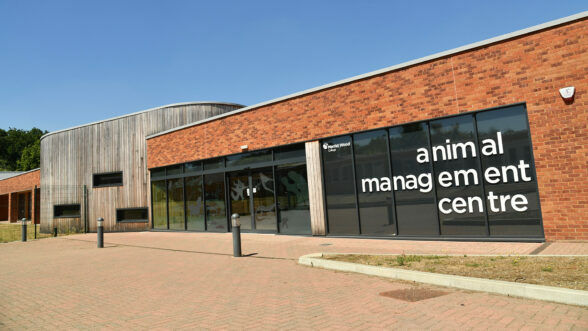
As we prepare to officially open the new buildings at Merrist Wood College and University Centre this week, that is one of the questions I think this investment asks of us: how can a college contribute more fully to the working lives of the people around it?
For me, the answer starts with recognising adult education as an essential part of economic development, rather than an additional service that colleges provide.
Developing skills, not just filling vacancies
There is a difference between filling a vacancy and increasing the skills available within a local economy. Recruiting an experienced person from a neighbouring business may solve an immediate problem for one employer, but it can leave another facing the same difficulty. Recruitment will always matter. Alongside it, there has to be a sustained commitment to developing people.
That includes employees who are ready for greater responsibility, self-employed people who want to extend what they can offer, and experienced professionals whose work now requires knowledge they weren’t expected to have when they first trained.
These people are not starting from nothing. They bring judgement, practical experience and an understanding of their customers and industries. Good adult education should recognise the value of that experience and help people build on it.
Supporting people as their careers evolve
In land-based education, that distinction is particularly useful. Consider someone who has spent years developing their practical expertise and is now taking responsibility for a team or a larger project. Their technical ability remains valuable, but the next stage of their career asks something different of them. Planning work, managing resources and supporting colleagues requires development in their own right.
Equally, an experienced practitioner may need to understand a different approach to managing land, new equipment or the environmental implications of decisions they make every day. Returning to education in those circumstances is a sign of professional ambition, not a gap in someone’s ability.
The development of our adult provision, including Skills Bootcamps, is part of Merrist Wood’s response. It sits within Activate Learning’s wider ambition to expand adult learning and work with employers to shape provision around the skills they need. The important point is the purpose behind that work: helping people develop without assuming they can put their working lives on hold.
Making adult education genuinely accessible
That requires more than offering a shorter course. For someone running a small business, time away from work has an immediate cost. For an employee, taking part may depend on whether their employer can release them. For someone with caring responsibilities, the timetable can determine whether an opportunity is genuinely available at all.
We need to take those constraints seriously. Otherwise, we risk creating training that addresses a skills need on paper but cannot be accessed by the people it is intended to support.
There is a shared responsibility here. Colleges need to listen carefully, design relevant learning and be clear about what it can help someone achieve. Employers need to look ahead at the development their people will need and make room for it, rather than waiting until a vacancy or a new contract exposes a problem.
Connecting specialist skills with the wider economy
Our specialist role at Merrist Wood gives us a particular contribution to make. But “land-based” should not be read as separate from the wider economy. The management of landscapes, estates and green spaces connects with the places where people live, work and spend their leisure time. The skills involved have relevance well beyond the boundaries of a college or a single industry.
That is why the investment in our campus matters to a broader community. The new workshops, laboratories, digital learning spaces and commercial glasshouses strengthen the facilities available for practical and technical education, with adult learning among the routes the redevelopment is intended to support.
But better facilities do not, by themselves, guarantee a stronger local workforce. Their value depends on the teaching, partnerships and opportunities we build around them.
Measuring the impact of investment
I want us to judge that value by more than participation alone. Did someone gain the knowledge to take on a more demanding role? Can a business now undertake work it previously lacked the skills to deliver? Has an experienced employee been able to adapt rather than find their opportunities narrowing?
Those are meaningful measures of a college’s economic contribution. They also keep the focus where it belongs: on what people can do as a result of their learning.
Investing in today’s workforce and the next generation
As we mark the opening of our new buildings, we should be ambitious about who this investment is for. Young people beginning their careers are central to that ambition. So are the people already working across Surrey and the surrounding area, whose experience is an asset we should continue to develop.
Merrist Wood’s role is to support both. The next generation needs a strong start, and the current workforce needs more than the education it received a generation ago.